
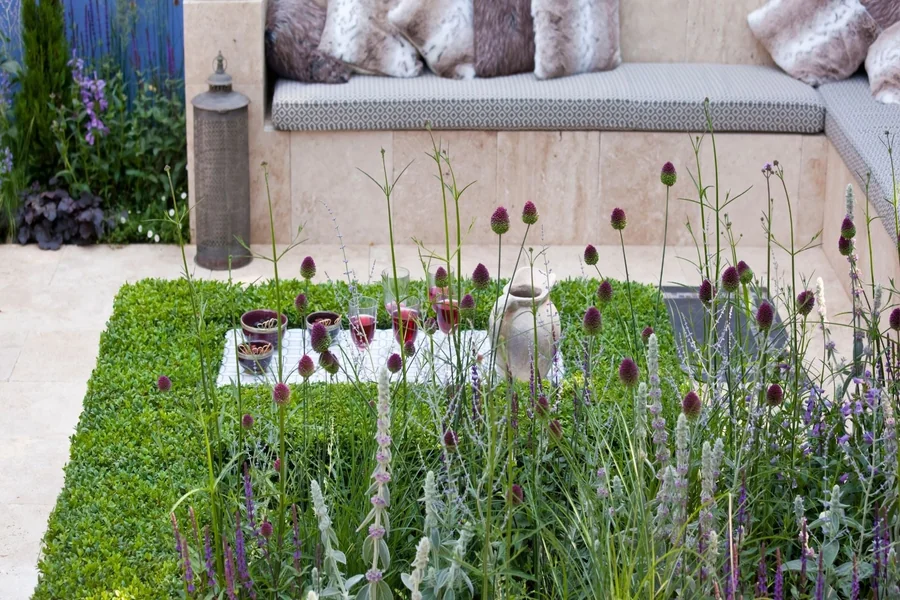
Sunken Lounges, Brick Planters and Bold Paving: Why Retro Gardens Are Back
For a long stretch, outdoor design leaned hard into the same familiar formula. Lots of grey, lots of minimalism, lots of neat lines, and a general feeling that every backyard was trying to become a slightly toned-down resort. Clean enough, sure, but not always all that memorable. Lately there’s been a noticeable swing in the other direction, and 60s and 70s style backyard landscaping is starting to feel far more appealing than it might have a few years ago. Not as kitsch, not as a joke, and not in some full Austin Powers fantasy either. More as a warmer, more expressive way to make outdoor spaces feel lived in again.
Part of the appeal is visual. Retro gardens had colour, texture, personality, and a bit of swagger. Part of it is emotional as well. People are getting tired of outdoor spaces that look polished but slightly anonymous, as though they were designed mainly to photograph well and offend nobody. A backyard with a bit of 60s or 70s energy tends to feel more relaxed than that. It invites actual use.
People want gardens with character again
That’s really at the centre of it. For years the safest outdoor choices kept winning; charcoal pavers, monochrome palettes, generic timber screening, clipped greenery, maybe a neat lawn if there was room for one. It all looked respectable, though it could also feel oddly cautious. You’d walk into some backyards and struggle to remember anything about them ten minutes later.
Retro-inspired gardens don’t have that problem. They’re more likely to use warm brick, bold planting, painted features, curved paths, patterned paving, sculptural pots, or those slightly nostalgic colour combinations that should feel dated on paper but somehow don’t. Ochre, olive, rust, mustard, avocado, terracotta, faded orange, creamy stone tones; suddenly all of that looks much more interesting than another sea of cool neutrals.
The whole space starts to feel like it belongs to a person instead of a trend forecast.
The old materials are part of the charm
One reason these gardens are landing again is that the materials from that era still carry a lot of warmth. Brick planters, crazy paving, concrete pavers, breeze blocks, pebbled surfaces, timber pergolas, rendered walls, built-in seating; there’s a tactile quality to them that modern outdoor design sometimes smooths away.
Even when people aren’t recreating a retro garden exactly as it might have appeared in 1972, they’re borrowing the parts that still feel good now. A low brick edge around a garden bed. A patterned paved area instead of one giant plain slab. A screen that adds shape rather than disappearing politely into the background. A courtyard corner that looks like it was designed to be sat in for hours with a drink rather than merely passed through on the way to the clothesline.
That sort of detail gives a backyard a pulse.
Curves have helped loosen everything up
One of the nicest things about retro landscaping is that it’s far less uptight about straight lines. You see more curves, rounded edges, layered shapes, and those slightly playful gestures that stop a garden feeling too engineered.
That matters because a lot of contemporary outdoor design can feel a bit rigid. Every border is squared off, every zone is crisply defined, every step is perfectly aligned. There’s nothing wrong with structure, but too much of it can make a backyard feel as though it’s been ordered into behaving itself.
Retro influence softens that. A curved path, a rounded planting bed, a circular paved area, a kidney-shaped patch of lawn, even just a less formal arrangement of pots can change the mood of a space surprisingly fast. It feels friendlier. Less stern. More like somewhere you might actually sprawl out on a Sunday afternoon rather than admire from the kitchen window.
Colour has crept back in, thankfully
Outdoor spaces went through a fairly long phase of pretending colour was somehow unserious. Everything had to be stone, black, grey, white, or timber toned within an inch of its life. That made sense for a while, but people have clearly had enough.
Retro gardens give colour permission to return without the whole thing becoming chaotic. You might see it in painted fencing, tiled details, outdoor furniture, pots, murals, cushions, or planting choices that lean into richer foliage and flowers rather than sticking to the same restrained green palette. Even one or two strong colour notes can wake up a tired outdoor space.
The point isn’t to make the yard look loud for the sake of it. It’s to stop pretending every backyard has to look restrained in order to feel tasteful.
Planting feels more generous in a retro-inspired space
Another reason these gardens feel good is that they tend to be less sparse. Not necessarily overgrown, just fuller and more textured. There’s usually a sense of abundance to them, with layered foliage, more dramatic leaves, and a slightly looser relationship to strict minimal planting schemes.
That style suits the Australian climate surprisingly well in many cases, especially when people work with hardy varieties and a palette that complements the house. Big-leaf plants, sculptural shrubs, cascading forms, mixed heights, bold pots, and clusters of greenery all help create that slightly lush, slightly cinematic feel without needing a huge block.
It also makes the garden feel older in a good way, as though it has a bit of history and softness around the edges rather than arriving fully assembled from a catalogue.
It works especially well with older homes
Mid-century and 70s homes were never going to look their best surrounded by outdoor spaces that ignore their architecture completely. A lot of these houses have low rooflines, interesting brickwork, timber details, split levels, sunken areas, or distinctive facades that actually suit a more characterful garden beautifully.
When the landscaping picks up on those cues, the whole property starts to make more sense. The house and garden feel like they belong to the same conversation instead of arguing politely across the boundary line. Even homes that aren’t strictly from that era can benefit from some of that language, especially if the goal is warmth and personality rather than sharp, hyper-modern contrast.
People are craving a bit more fun outdoors
That sounds simple, but it’s probably true. Outdoor design has been very serious for a while. Carefully curated, yes. Beautiful at times, absolutely. Fun, not always.
Retro references loosen things up. They make room for conversation pits, striped umbrellas, sculptural furniture, tiled tabletops, sun-baked colours, and little moments that feel slightly unexpected. They remind people that a backyard can be stylish without being severe, and nostalgic without feeling stuck in the past.
There’s also something comforting about the look. It taps into memories of older family homes, holidays, suburban patios, and gardens that felt made for actual hanging around rather than immaculate presentation.
The best versions don’t look themed
That’s important. A good retro-inspired backyard doesn’t feel like a set. It doesn’t need every surface to be period-correct or every detail to scream “vintage”. Usually the strongest spaces just borrow the spirit of the era and bring it into the present in a way that still feels fresh.
A bit of warmth in the palette, more shape in the layout, more confidence in the materials, more personality in the planting, maybe one or two standout details that stop the whole thing feeling generic. That’s often enough. Once those elements are in place, the backyard starts to feel more relaxed and more distinctive without tipping into costume territory.
It’s a reaction against sameness, really
That may be the bigger story here. Retro gardens are back because people are tired of outdoor spaces looking interchangeable. They want charm, softness, warmth, and a stronger sense of identity. They want gardens that feel like part of home life rather than an outdoor extension of a mood board.
The 60s and 70s had their share of excess, no argument there, but they also understood something modern landscaping occasionally forgets: a backyard should have a bit of soul. When that returns, people notice.