3 Safe Sedation Options For Little Patients—A Parent’s Guide
Your child needs dental treatment. You feel fear, guilt, and pressure to choose the right path. Sedation can sound scary. It also can protect your child from pain and trauma. You do not have to guess. You only need clear facts and safe options. This guide walks you through three proven choices that many parents use every day. Each option supports comfort, safety, and strong teeth. You learn what your child will feel, how long it lasts, and what risks to watch for. You also see questions to ask your children’s dentist in Cary, NC so you do not feel rushed or confused. You deserve honest answers. Your child deserves calm care. By the end, you can look at a treatment plan and say, “I understand this. I can protect my child. I can say yes or no with confidence.”
Why Sedation Is Used For Children
Dental visits can trigger fear. Bright lights. New sounds. Strange tools. For some children, the stress feels overwhelming. Sedation can help in three common situations.
- Your child has a strong fear or past trauma
- Your child has special health needs or trouble sitting still
- Your child needs long or complex treatment in one visit
When used with care, sedation supports three goals. It lowers fear. It reduces pain. It helps the dentist work safely and quickly. The American Academy of Pediatrics and the American Academy of Pediatric Dentistry share joint safety rules for child sedation.
Option 1: Nitrous Oxide (Laughing Gas)
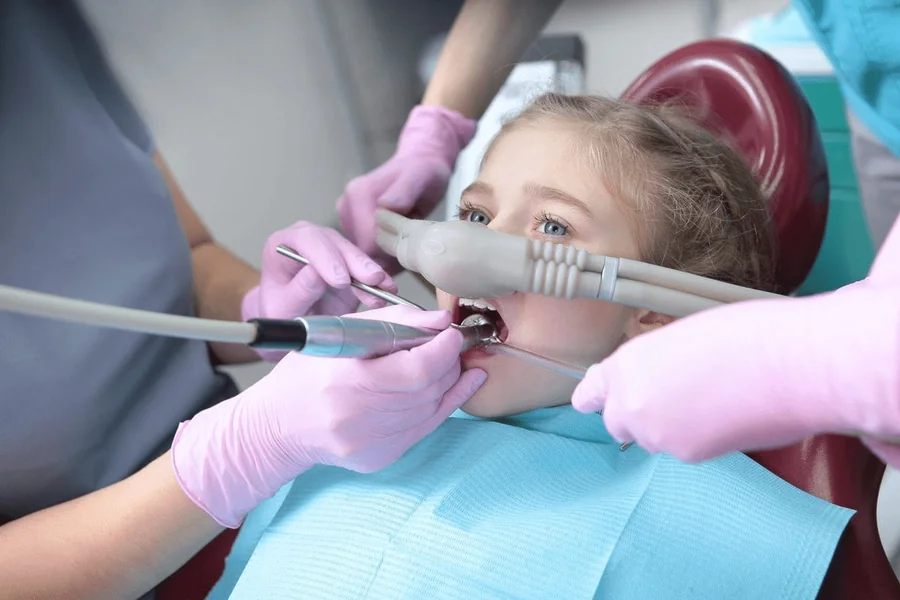
Nitrous oxide is the lightest option. Your child breathes a mix of gas and oxygen through a small nose mask. The gas creates a calm, floaty feeling. Your child stays awake and can talk.
You can expect three simple steps.
- The mask goes on, and your child breathes through the nose
- The gas starts, and your child feels relaxed in a few minutes
- At the end, the dentist gives pure oxygen to clear the gas
The effect fades within minutes. Your child can often return to school the same day. Side effects are rare. Some children feel mild nausea or a headache. You can ask the dentist to stop the gas at any time.
Nitrous oxide works well for children with mild fear, a strong gag reflex, or short treatments. It does not fix deep panic. It also may not work well for very young children who cannot keep the mask on.
Option 2: Oral Sedation Medicine
Oral sedation uses liquid or pill medicine that your child swallows. It creates deeper relaxation. Your child stays awake but feels sleepy and less aware of the work.
Here is what usually happens.
- Your child does not eat or drink for a set time before the visit
- The dentist gives the medicine in the office
- You wait together while the medicine takes effect
Your child may remember little of the visit. Balance, speech, and focus can stay off for several hours. You must watch your child closely at home. Oral sedation can cause nausea or rare breathing problems. Trained staff and proper monitoring reduce these risks.
This option helps children with stronger fears, special health needs, or longer procedures. It requires careful planning and strict safety checks.
Option 3: IV Sedation Or General Anesthesia
IV sedation and general anesthesia are the deepest options. A trained anesthesia provider gives medicine through a small IV or mask. Your child sleeps through the visit. There is no memory of the work.
These methods are used when.
- Your child needs many teeth treated at once
- Your child has a severe fear or cannot cooperate at all
- Your child has complex medical needs that require close control
The risks are higher with deep sedation. Breathing and heart rate must be watched every second. That is why national safety groups stress strict rules. .
Your child may feel groggy for the rest of the day. You must stay home and give full care until your child is steady, can drink, and can urinate.
Side By Side Comparison Of Sedation Choices
| Sedation Type | Awake Or Asleep | When It Starts | How Long It Lasts | Common Uses | Common Concerns
|
|---|---|---|---|---|---|
| Nitrous oxide | Awake and responsive | Within 3 to 5 minutes | Stops within minutes after gas ends | Short visits. Mild fear. Gag reflex control. | Mask discomfort. Mild nausea or headache. |
| Oral sedation | Awake but sleepy | Within 20 to 45 minutes | Several hours after visit | Moderate fear. Longer work. Special needs. | Nausea. Unsteady walking. Rare breathing issues. |
| IV or general anesthesia | Asleep and unaware | Within seconds to minutes | Until medicine is stopped and wears off | Extensive treatment. Severe fear. Complex health needs. | Higher risk. Needs hospital-level training and tools. |
Safety Checks You Should Always See
Every child who receives sedation needs strong safety steps. You have the right to see and ask about each one.
- Medical history and medicine review before the visit
- Clear fasting instructions in writing
- Trained staff with current life support cards
- Monitoring tools for heart, breathing, and oxygen
- Emergency plan and equipment in the room
- Written instructions for care at home
If any step feels rushed or ignored, you can pause the plan. Your child’s safety comes first.
Questions To Ask Your Child’s Dentist
Bring this short list to your visit. It keeps the talk simple and direct.
- Why do you recommend this level of sedation for my child
- Who gives and monitors the sedation during the visit
- What training and licenses do you and your team hold
- How will you watch my child’s breathing and heart
- What side effects should I expect at home
- What signs mean I should call you or go to urgent care
How To Choose The Right Option For Your Child
Three points guide your choice. Your child’s fear level. The length and type of treatment. The health history and any special needs. When those three factors are clear, the right option often stands out.
You do not need to feel ashamed of fear. You protect your child by facing it and asking direct questions. With the right sedation choice, your child can receive care without trauma. You can leave the office tired yet calm, knowing you stood guard and made a clear, informed choice.